Twelve tips to assist on the writer’s journey toward publishing


InterpersonalPix

In Mundelein, Illinois, sometime in the early 1990s, I prepared the science center of my preschool classroom for the day’s experiment. Kevin, my student, checked out the setup and decided he knew how to conduct the experiment and what the conclusion would be. “Teacher, I know your experiment. This sponge (he pointed to the long, skinny, natural sponge) holds more water than those two.” Kevin was correct.

I asked Kevin’s mother if I might use his statement when I got around to writing a book. She consented, but I never seriously thought I’d write one.

Life changed.

Several moves later, on a whim, I joined the Arizona chapter of the Society of Children’s Books Writers and Illustrators. At my first meeting I met Gale, who suggested I join the West Valley Writer’s Workshop in the Phoenix area. This led to joining one, then two critique groups.

The critique groups kept me writing. I didn’t want to attend meetings empty-handed with nothing to read for critique. By this time I’d begun writing parts of a Parenting manuscript—adolescence first then working backwards to infants and toddlers. I studied child growth and development in graduate school, and I am a mom, so writing on the topic of parenting made sense.

I find the following twelve tips useful:

  • Keep copies of projects you especially enjoyed. They may provide useful information for your stories. Names and details must be changed unless permission has been granted.
  • Find a comfortable writing space. I tried different areas of the house and finally found a room where I worked best. However, over time I’ve found that my work area changes with the seasons.

girlWriting

  • Make time for writing. Most writers have day jobs. I taught, so I sectioned off time on the weekends and one to two hours per day during the week, depending on the teaching load and inspiration.
  • Write what you know and enjoy. Writing from experience gives a rich, full-bodied read. Use research to add details, enhancing the story.
  • If the writer creates a story and others say, “bad idea, no one will ever publish it,” don’t listen to them. Write what needs to be written, according to the writer’s heart.
  • Take notes in a paper or online journal about humorous and not so humorous stories that happen at work and with your own children at home. These stories make great vignettes. My children, adults now, have given me permission to use snippets from their lives in my books.

julia_waterLaurel_GreatAmerica

  • Read aloud what has been written. I am always surprised at the multitude of errors I catch by reading my work out loud.
  • Consider membership in a writer’s organization. Writing is solitary work, but if you want to get your stories out to the public it is necessary to make connections in the writing and publishing world. The website http://www.bookmarket.com/writers.htm has a good list of organizations for writers and editors. The site is a work in progress.
  • Join critique groups. They are invaluable. For me, it’s like attending graduate school for free. Every group will be different. I like the in-person groups to get to know the other writers on a more personal level. Every week brings new writing in many genres. I am in awe of the growth in the critique member’s writing. Some days I go home wondering how I’m going to implement the changes suggested by group members, but it’s all for a good cause—polished writing.
  • Check out Meet Up. A plethora of groups on the site cover a variety of interests—writing is one. Say, for example, a writer wants to work on a Sci-Fi fantasy book. Sci-Fi groups are available on http://www.meetup.com/. Learn more about the topic at the meetings, and use knowledge gained for book material if you choose. The possibilities are limited only by imagination and time.
  • Consider a writer’s website. An inexpensive, user friendly option is WordPress, https://wordpress.org/, which is what I use. New themes are frequently added.
  • Start a blog. People want to know about the writer and what he or she is doing. Blogging provides the writer with an opportunity to communicate directly to and develop a personal relationship with the reader. I love it when people make comments on my blog.

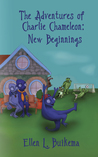
What began as an offhand comment to a parent of a preschool student twenty some years ago became the inspiration for my first book—Parenting . . . A Work in Progress, published in December of 2014. This was followed by a children’s chapter book series, The Adventures of Charlie Chameleon, the first one, subtitled New Beginnings, was published in December of 2015, soon to be followed by School Days, Summertime, and then Holiday Celebrations.

Sometimes it’s good to do the scary thing; take a deep breath and jump right in.

Charlie Chameleon in the Classroom

24 in class


The Charlie stories are written to engage readers with characters who are easily relatable. The stories model how children can deal with life’s situations. Each chapter ends with one or more activities directly related to the individual chapter, for home or the classroom.

Higher level vocabulary is included for the children’s personal enrichment. Humor is used to keep children interested and willing to increase their reading ability. The stories are purposely written to amuse adults as well as children.

My primary goal in writing the Charlie stories is to promote empathy. Over the course of the series, the characters, Boris Bunny the local bully in particular, grow and change.

The first book in the series, The Adventures of Charlie Chameleon: New Beginnings deals with change. In the book, Charlie learns that he must move and leave his home, friends, soccer team, and school. He encounters a bully, makes new friends, and attends a new school. Children learn through reading these chapters that it is okay to feel sad during transitions and new experiences can be fun.

The next two books, School Days and: Summertime, are in the final stages of editing and are awaiting illustration decisions. A fourth, on holiday celebrations, is still in the early writing phase.

The following link contain an author biography along with a review from Readers’ Favorite: https://readersfavorite.com/book-review/the-adventures-of-charlie-chameleon

I can provide a PDF for classroom use and am on Skype as ellen.buikema if any teacher would like the students to have a long distance chat with the author. I taught regular and special education for 23 years—with an Early Childhood emphasis as well as Resource Specialist.

Contact me anytime!

Review of The Adventures of Charlie Chameleon: New Beginnings

The Adventures of Charlie Chameleon (New Beginnnings, #1)The Adventures of Charlie Chameleon by Ellen L. Buikema
My rating: 5 of 5 stars

Reviewed By Barbara Fanson for Readers’ Favorite

The Adventures of Charlie Chameleon: New Beginnings is a very imaginative story about a chameleon and his family. He even has a pet fish — a fish that gets seasick! Author Ellen Buikema is a very creative writer. Who else would have put a water-helmet on a fish so he can jump up and down on a bed? But, I don’t think I want to join them for breakfast; they’re eating waxworm cereal. When Charlie learns that his father has a new job in another town and they will have to move, he is not too happy. He doesn’t want to move away from his best friend Tamika the turtle, his school, or his soccer team.

Buikema does an excellent job describing the characters and the scenery. The Adventures of Charlie Chameleon even includes a recipe for the Berry Smoothies that Charlie and Tamika drank. The book also includes an email with a secret code activity for readers to solve. Charlie makes friends with Gary Gecko, who wears glasses, and the two play spaceships and astronauts together. They’re even in the same class. I think everyone can relate to Buikema’s lovable characters.

It was nice to see a spaceship activity sheet with instructions on how to build a spaceship, but I wish there was an illustration of the spaceship. Elizabeth Engel’s well-drawn illustrations are helpful and fit the junior grade novel. It’s a short, but captivating read that will keep you spellbound with problems and solutions confronting Charlie daily. And now I’m yearning to read the sequel.

View all my reviews

Ten tips to help your child learn to love reading

Singing

  1. Sing, play, and talk with your child. Children love to hear your voice. It doesn’t matter if you sing on or off key. Interaction is what children crave.

momWith BabyReading

  1. Read aloud to your child every day. Reading to your child is the next best thing to a hug. Bring books along to the dentist, doctor, or on other errands where there will be some wait time. Read to children as part of a bedtime ritual. Routines are reassuring.


basketOfBooks

  1. Have a variety of reading material that is easily available. Place books in baskets in different parts of the home, including in the bedroom, bathroom, kitchen, and TV areas. This allows children to choose books on their own and makes cleaning up after themselves easy. Consider putting together a backpack prefilled with books to grab and go for short or long distance travel.

atTheLibrary

  1. Read many types of books. Children love learning about their world, how things work, and all kinds of animals. Reading for information is important for childrens’ future. They love books with rhyme, silly words, and fairy tales. Start bringing your children to the library when they are young, and visit regularly.

dadReading With Son


  1. Pace the reading. Read with expression! Change the quality and volume of sound while reading to make listening to stories fun. Take your time, don’t rush. Stop now and then during reading time to let your child think about the story. Ask questions to encourage thinking.

childPointingAtWords

  1. Repeat. Children enjoy reading favorite stories over and over again, even after they are able to repeat all the words by heart. Encourage them to read their favorite lines with you. Point to the words as you read them together. Talk about your child’s favorite characters in different contexts, like “What do you think The Cat in the Hat would do if he was in our kitchen right now?”

playingWithRefrigeratorMagnets

  1. Find words and letters everywhere. As early as age two, children may identify logos they see often at home and other places they travel. This important milestone is the beginning of the knowledge that print has meaning. Cereal boxes are great to use for finding letters and logos, as are menus, calendars and occupant mail. Take turns finding the same letter with your child. Write to do and grocery lists together. Have him make words with magnetic letters on the refrigerator.

youngChildWriting

  1. Help your child learn about letter sounds. Show her how to write her name. A child’s name is her first “stamp” on the world. Say the sounds of each letter as you print them. Sing an alphabet song and include the sounds of the letter in the song, for example: https://www.youtube.com/watch?v=BELlZKpi1Zs . Encourage your child to write but try not to correct him. Beginning writing should be playful.

playingVideoGame


  1. Limit tube time. Select TV programs with your child in advance. Watch TV and talk about the programs together. Monitor time on other electronic devices. Video games are good fun and many of them are educational, but balance is needed. Too much close work does not give the eyes enough exercise.

parentNightSign

  1. Get involved with your child’s school. You are your child’s first and best advocate. Get to know your child’s teacher. Find out how you can support your child in her academic goals. If at all possible, volunteer time in the classroom. Work schedules make this difficult, but advance planning can help make this happen.

You are your children’s first teacher. Reading to them is a great start in preparation for life in school and beyond.